
Running in the Dark Season: How to Stay on Track Through Autumn and Winter
The clocks went back at the end of October. If you run after work, you’re now running in the dark, often in drizzle at six degrees. No surprise that for many of us, volume drops in November and December. Yet this is exactly when the base for next spring is built.
We’ve put together a few thoughts on getting through the dark months, and on which RUNALYZE analyses help along the way. The screenshots come from an account of someone on our team.
What did your last winters look like?
The monthly stats on your dashboard are worth a look. They show your volume per month, one year below the other, so patterns jump out right away.
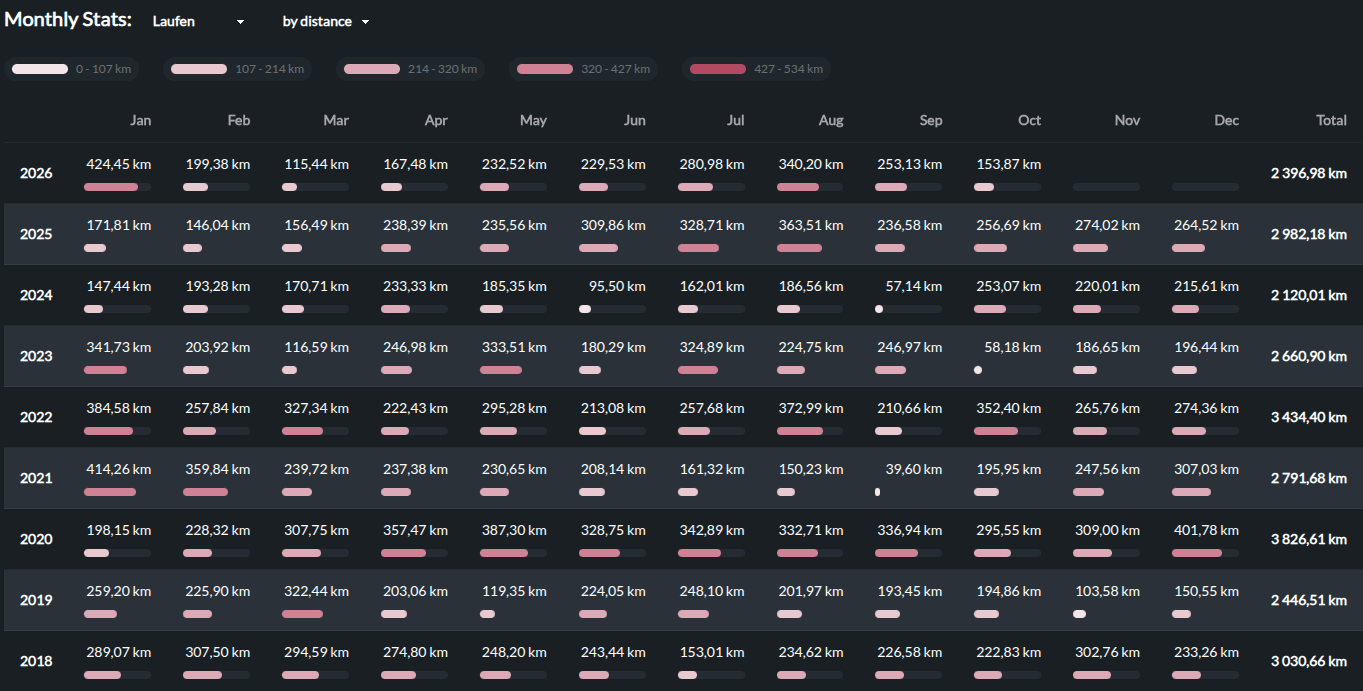
There’s no winter slump in this account. In most years, November and December are barely below the summer months, and in 2020 December was even one of the strongest. That’s more the exception, though. For many runners the table looks different, with pale cells at the end of the year.
If that’s you, a concrete goal helps more than a good intention. In the goals panel on your dashboard you can set a weekly distance, for example. It can be lower than in summer.
Aerobic base instead of all-out intervals
Wet leaves, poor visibility and slippery paths are not a great setting for hard sessions. Winter is perfect for long, easy runs, though. The pace that counts as “easy” for you right now is shown on the dashboard under Training paces, based on your current shape.
Whether you stick to it is visible in the Analysis tab, where heart rate and pace zones are broken down by month. If almost everything in November ends up in the upper zones, your easy runs are probably too fast. If you want to dig deeper, look at the aerobic decoupling of your longer runs.
Running in the cold
Under Weather, RUNALYZE shows the temperatures you ran in through the year, compared with the average over all years.
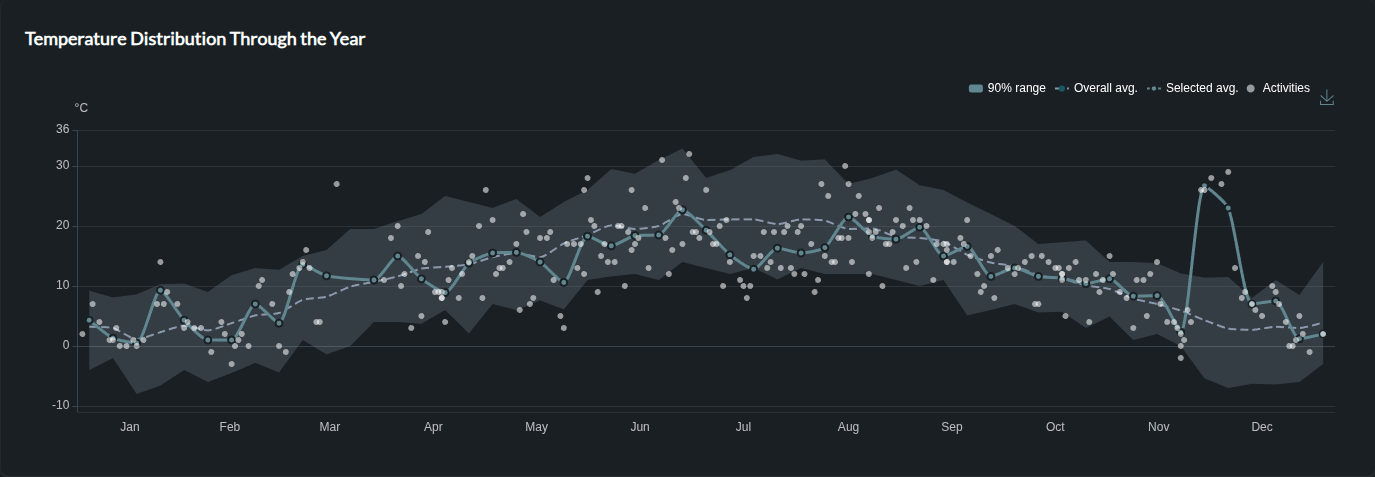
From November on, the runs in this account regularly head towards zero degrees. What matters more than the exact number is what you wear: several thin layers rather than one thick jacket, and better to pack a hat and gloves than to miss them. After the run, get out of the wet clothes quickly.
If you have separate winter shoes with more grip, you can add them to your equipment. Come spring, you’ll also know how many kilometres they’ve done.
Keep an eye on sleep and HRV
Less daylight throws off your sleep rhythm, and it’s also cold and flu season. If your watch or tracker records sleep, you’ll find it under Health → Sleep.
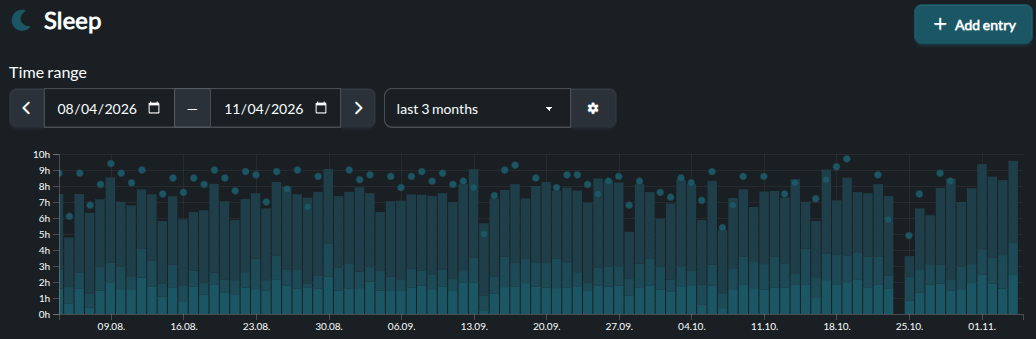
Heart rate variability often tells you even more. RUNALYZE shows your daily HRV values together with your personal normal range.
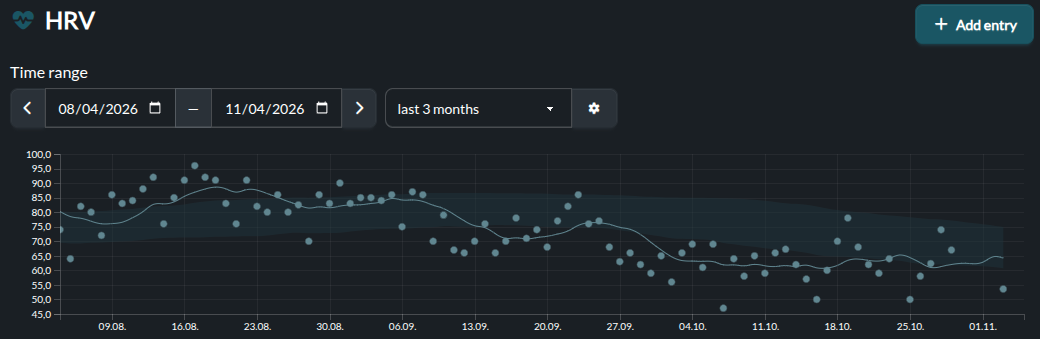
You can clearly see the HRV slipping from late September and staying below the normal range since then. Single low values are normal. But if it stays low for days or weeks, there’s usually a reason: too little sleep, stress at work or an infection on the way. Then an easy run or a day off is usually the better call than the planned interval session.
Training indoors isn’t a missed day
Some evenings outside are just not nice. A treadmill, a turbo trainer or Zwift are perfectly fine then. With the Zwift integration those sessions land in RUNALYZE automatically and count towards training load, fitness and fatigue.
Staying safe in the dark
This has nothing to do with data, but it matters most. A headlamp doesn’t just help you see, it helps others see you. Reflective details on your jacket and shoes make you visible to cars early on. In the dark, familiar and lit routes are the better choice. And if you run alone, let someone know where you’re going.
If you can make it work, an occasional lunchtime run is worth it too. A bit of daylight does you good.
Have a good winter!